
Interview with a Vamp
The spectacular rise of poet Jeffrey Bryant

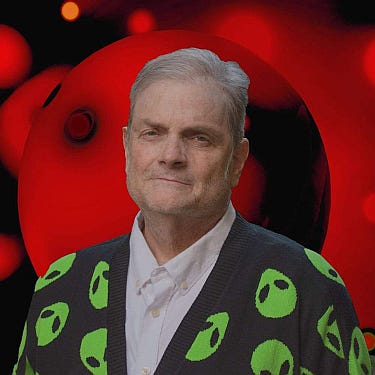
It began for me in August of 2024. I stumbled across an excellent online magazine, The Journal of the Plague Years, edited by Susan Zakin, and there, unexpectedly, amongst all the primo journalism and prose was a poem, “The Best of All Possible Futures,” by a poet unknown to me. That poet was Jeffrey Bryant. The poem? Vivid, deeply personal, certainly intimate, also finely crafted and emotionally pitch perfect throughout, the speaker’s language direct and precise, with images arranged like expert cinematography in a masterfully directed film…
He sits on my bed,
pulls the wedding ring off.Leave it on I say,
you don't want to lose it,
plus, I think you're hotterwhen you're conflicted.
That poem led me to Susan which led me to Jeffrey and I’ve been following his meteoric path of lit mag/journal publication ever since. Now, lucky us—voila!—his debut collection is here. Jeffrey was kind enough to exchange emails with me so I could ask a few vital questions, help introduce him and his book to even more lovers of poetry. You’ll find additional info on book launch and purchase below the interview.
MDS: Thanks so much for talking with me, Jeffrey, and congrats on your debut full-length collection, The Catacombs of Vanished Lovers, but first, full disclosure to readers out there: I got to publish several pages of your poems when I served as Guest Editor for the March 2025 issue of Cholla Needles Literary Journal, so I've had an early peek. The book is available for pre-sale right now, and you'll be doing a reading for the hard launch in L.A. on July 6th, all coming about thanks to Natasha Dennerstein’s new LGBTQ poetry imprint, Cherry Pie Press. Talk a little if you would about that collaborative journey so far—how you met, how the book came together, how the collab and the mission is blossoming.
JB: Natasha and I met in a 30 days/30 poems biannual workshop facilitated by our mutual sister in poetics Hollie Hardy. I’ve done other workshops of Hollie’s that were vital to the honing of my craft, but that workshop brought Natasha and I to each other’s attention and helped connect me to many poets I consider part of my poetry tribe. Natasha’s own collections of poems spoke to me in very revelatory ways that resonated deeply, especially her brutal and brilliant Broken, a sort of first person narrative in prose poems of the notorious serial killer Aileen Wuornos, wherein Natasha gives this tortured woman’s voice. When she released Ars Poetica last year, I read with her at Village Well in Culver City and the bond deepened. Then, in December of last year, she honored me with her offer to do a full collection of my poems on her new queer imprint, a kind of sprinkling of fairy dust that still strikes me emotionally. She’s been widely published, sits on the board of LGBTQ+ imprint Foglifter Press, was a Lambda Literary fellow, earned her MFA from SFSU, and studied with giants like Maxine Chernoff. So, the time was ripe, as we Cherries like to say, for this fierce and powerful queer force of nature to put her mark on the queer publishing world. To say the least, I am over-the-moon honored to be the lead-off poet.
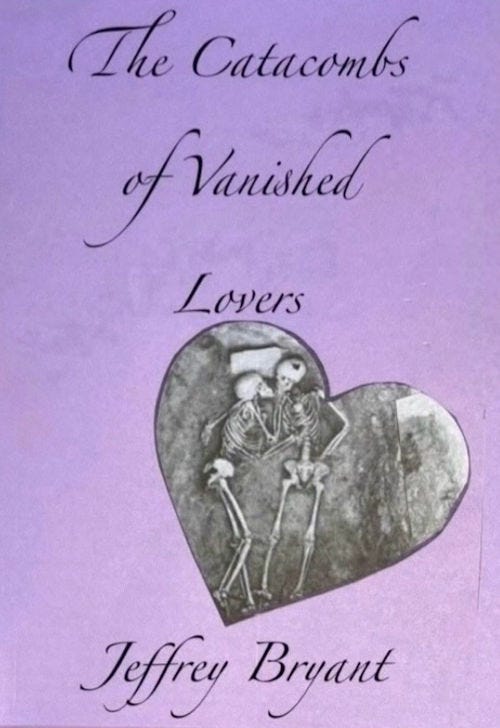
MDS: Let’s talk about poems in your book. Is “The Best of All Possible Futures” included? Since that was first contact for me, maybe you could reveal something of how that poem came about, something of your process, if there are regularities, routines, or rituals in your approach to poems. Also, “Play me off, he said,” a poem I published in March. My breath stopped when I read it for the first time. I’ve read the poem several times since, but I do remember to breathe now.
JB: Ha! I’m glad you’re breathing again! Seriously, thank you for that response to that poem, which touches on death and AIDS implicitly, and the isolation such devastation left our community in the wake of so much loss.
“The Best of All Possible Futures” is indeed in there, and I recall vividly your positive response when it appeared in Susan’s journal. The poem fictionalizes a couple of actual experiences from my wayward youth: JC typing, which was the most depressing class I’d ever taken, and a tryst with a college instructor who was married and nervous about cheating on his wife, not to mention the implications a good roll in the hay would have for his future. That poem, like a lot of my poetry, is narrative, with a general loose theme of love, illness, loss, woven into a snapshot of the narrator’s life. These poems blend confessionals, posit me as autobiographical narrator in some places, and then just your tour guide in others. I usually keep draft emails of lines or word combinations on my phone, and then expand upon them and let the themes find themselves. But usually, I land a lot on love and sex, like a vamp, you might say!
MDS: Which poems do you consider quintessential to this collection? I’m guessing “Play me off, he said,” is one. Say just a bit about each, please, their relation to each other and the book as a whole.
JB: “Hollywood Ending” reflects my fear of aging out of desire or attractiveness, which I think is true for us all, but in this poem the fear is articulated in queer terms. I wanted to frame the desire and the longing more than any outcome or the sex itself, and give it a poignancy at last that leaves the reader with some hope.
“What the Dead Believe” was a fun reminiscence poem about those post-club coffee shop nights, when we either didn’t think we had any future or simply basked in the idea that tomorrow didn’t matter (hence the smoking). It’s kind of a swerve poem in that you are reading the narrator thinking they are alive, and then, in the next stanza, they talk about their grave marker and its contents, and it becomes a poem about what thoughts the dead may have when the living visit them, almost as a way of not letting them go. It’s a little something from the resilient goth in me.
“Play me off, he said,” weaves in the devastation of imminent loss with efforts to soothe those dying, to not mourn those still here, and was inspired in part of the loss of so many friends to AIDS. It ends in isolation, implied anyway, that kind of jolts the reader in the closing lines.
MDS: I’m always interested in a poet’s “most valued” influences—personal icons of art, poetry, music, film, etcetera. Can you give us maybe three, plus some insight into how their vibes identifiably ripple through your collection?
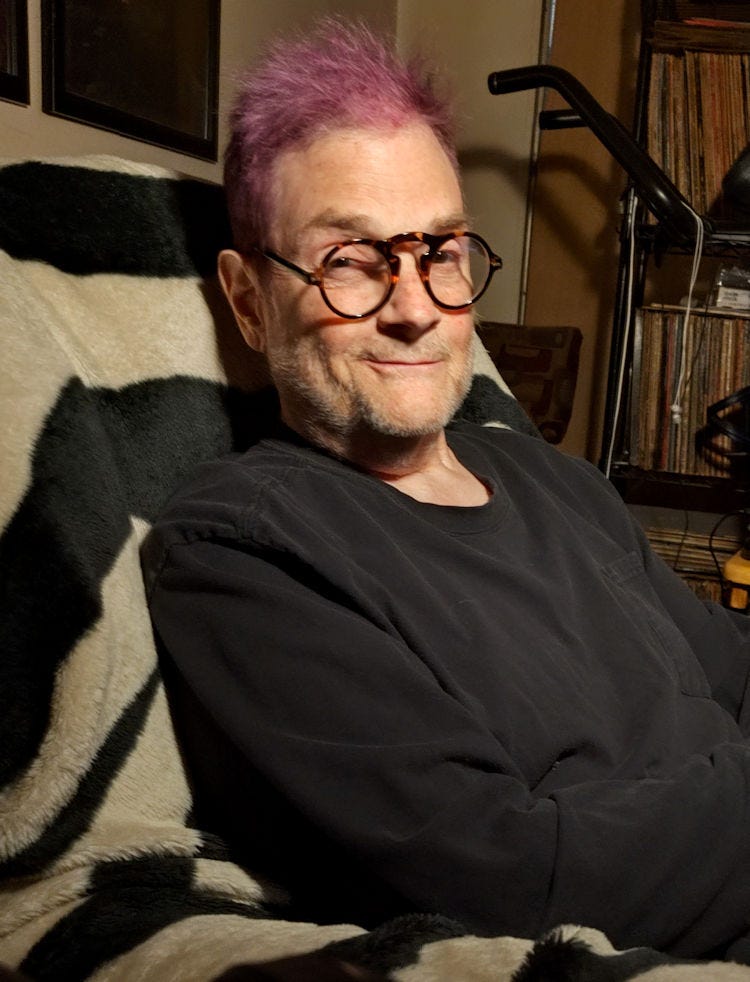
JB: Rimbaud has long fascinated me, his chaotic life, his queerness, his lover, his poetic mind blasting holes in the conventions of poetry. I have a first edition of his complete works and draw upon it frequently not only to bask in his language and the surprises and twists and earthiness of his work, but to jump start my own poetic engine, to draw from his symbolism to avoid the traps of realism. A couple of poems in Catacombs are straightforward polemics, which I wanted to include to address the darkness that can embed itself in queerness. Rimbaud brings me back to the poetic.
O’Hara was an instant kindred spirit when I first encountered his work. As a queer poet speaking to queer masks and fears (Homosexuality) and cultural references (I still roar reading “Poem,” with its hysterical Lana Turner references), he read like I felt. O’Hara is a strong influence on my resistance to form, my sense of the conversational or confessional, my dedication to swerves. His sense of humor was a major factor in making me a fanboy as humor informs my work as well.
Kaufman is a poet I discovered appropriately on a San Francisco trip eons ago, at City Lights (where else?), bought a copy of The Ancient Rain and was transformed. What I love about Kaufman, besides the vivid imagery and dazzling wordplay, is how he speaks to social realities without defaulting to speech making, how his metaphors and rhythms feel so spontaneous and immediate. He is a “poet as documentarian” without sacrificing the poetry.
MDS: Would you mind spilling some info on your background, history, poetics, sensibilities, and perhaps any mission you’re on with your work?
JB: My background is in theatre, political science (MA, with some preposterous notion that teaching might be fun), performance art, music. I headed to NYC in 1980 on a scholarship to the American Musical and Dramatic Academy and lasted six months before realizing I was still too young and stupid to be disciplined about anything. My sexual awakenings took place there. I came back to LA, got into extra work, a band, an art collective, and wrote poetry all throughout these years. It’s really only in the last three years that my poetic voice has emerged authentically and with confidence, maybe because the realities of cancer make time more precious. Who knows?
Catacombs is a biography of desire, sex, death and illness wrapping around each other. The narrator is not always the poet. Where they are closest to telling truth, it is in a conveyance of what the mind sees rather than exactly what memory holds. Some poems are straightforward recollections, others are wishful thinking, all of them seek to reveal and repurpose darkness as sacred, while establishing a divine right to our deepest yearnings. Some poems are polemic calls for justice and healing, closing divides, imagining boundary-less futures. Others are comical and whimsical, seeing the poet as a family member of the cosmos. In the end, pain, love, loss and transcendence are the framework themes, brought together by a poet making peace with illness and an accelerated mortality timetable, while always emerging fully queer into contested spaces.
MDS: Thanks again for doing this. I’m excited about your book and honored to play a role in advocating for your work. Any last thoughts for potential buyers/readers of Catacombs?
JB: Poetry became a form of prayer for me during the past two years. Whether or not the poems are read as such is up to the reader. But every poem in this collection was a form of healing myself through my fantasies, realities, memories, yearnings, regrets. This book is really a biography of my desires. Its themes are purposely organized in four broad categories of love, sex, life and death. Within each I invite the reader into my mind for a tour that's dirty, wild, grief stricken and hopeful. Get a copy, pray with me, and get turned on.
INFORMATION ABOUT BOOK LAUNCH AND PURCHASE BELOW
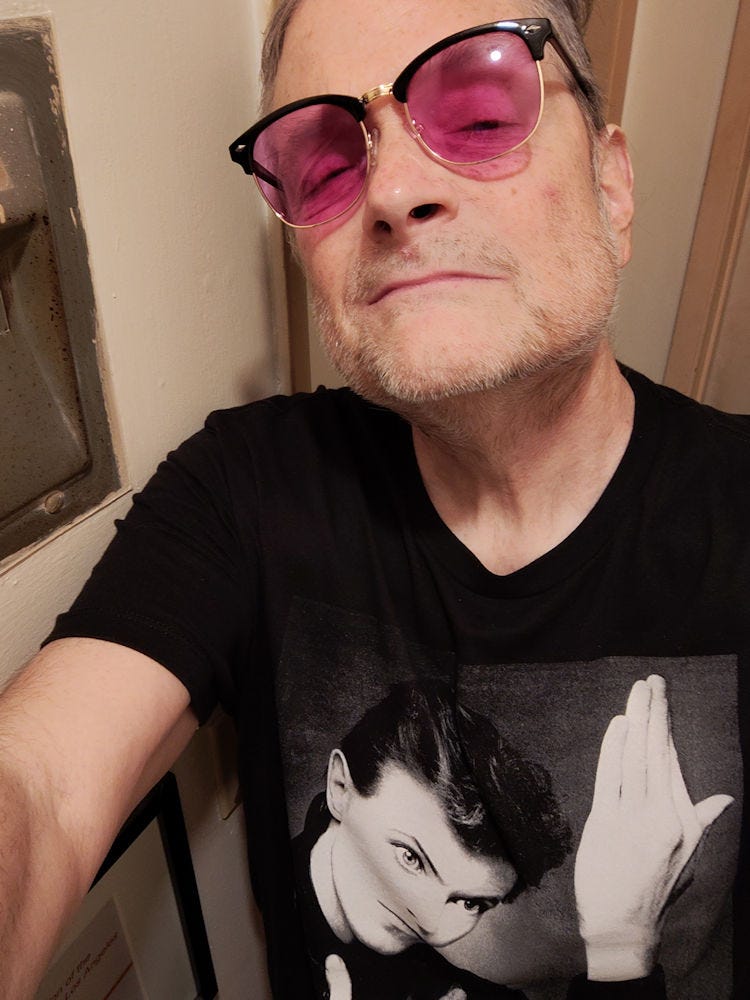
Much love and gratitude to Natasha Dennerstein and Cherry Pie Press for supporting publication of this interview!
BOOK PURCHASE
Copies can be ordered via email with your mailing/postal address to: thecherrypiepress@gmail.com. Cost is $19.95 plus $5 postage and handling.
BOOK LAUNCH
Sunday, July 6th at 7p.m., launch of The Catacombs of Vanished Lovers by Jeffrey Bryant will be at The Makery, 260 S Los Angeles St., Los Angeles, CA, supported by Performances by KR Morrison, T Gardiner and traci kato-kiriyama. To be live-streamed on Facebook.
Additional info on subsequent reading events can be found on the Cherry Pie Press Facebook page.
CHERRY PIE PRESS - PRESS RELEASE – May 7, 2025
There’s a new kid on the publishing block.
This year, 2025, saw the launch of The Cherry Pie Press, a new LGBTQ Poetry Imprint. The press is based in Oakland and is one of only a handful of small, indie presses nationwide specializing in LGBTQ Poetry.
The editor is Natasha Dennerstein, a well-known and widely published, “out” trans poet. “Right now is the perfect time to increase the LGBTQ presence in the publishing world,” Dennerstein says. The press intends to publish an inclusive list of LGBTQ poets and has a production schedule already booked through 2027.
This July sees the launch of the debut Cherry Pie Press collection by queer Los Angeles poet, Jeffrey Bryant. The collection is entitled “The Catacombs of Vanished Lovers” and is a lyrical rumination on Life, Sex, Love, Death and the whole damn thing. “It’s a very moving and very gay collection,” according to the editor, Dennerstein.
The launch event will be at The Makery in LA, July 6th, with Bay Area events to follow later in July, 2025.
You can catch Jeffrey reading from his newly released book on July 31st at Literary Speakeasy, the long-running reading series at Martuni’s, hosted by SF poet, James Siegel.
Bios
Natasha Dennerstein was born in Melbourne, Australia. She holds an MFA from San Francisco State University. Natasha has had poetry published in many journals internationally, including The North American Review. Her collections Anatomize (2015), Triptych California (2016) and About a Girl (2017) were published by Norfolk Press in San Francisco. Her chapbook Seahorse (2017) is available through Black Lawrence Press. Broken: A Life of Aileen Wuornos in 33 poems was published in 2021 by Be About It Press. Forthcoming in 2024 is Apps Poetica from The Los Angeles Press. Natasha was the 2023 Lambda Literary Retreat fiction writer-in-residence.
Jeffrey Bryant is a Pushcart-nominated queer poet from Los Angeles. His work has appeared in the LA Weekly, LA Times, Poetic Diversity, New Verse News, Poetrysuperhighway.com, Synkroniciti, Quill and Echo, Tension Literary, Journal of the Plague Years, Coiled Serpent, Altadena Literary Review, Shadowplay, Sparring with Beatnik Ghosts, and Cholla Needles Literary Journal 101. His debut collection “The Catacombs of Vanished Lovers” will be released in the summer of 2025 on Cherry Pie Press. You can find him on Instagram @jeffreybryant88.
Praise for The Catacombs of Vanished Lovers
The Catacombs of Vanished Lovers is a dragon’s heart, an enlightened lover’s autopsy uncovering treasures and wounds in life’s most vulnerable seasons. In every poem and prose piece, Jeffrey Bryant delivers readers something to savor or to chew, either decadent or magickal, pages of velvet and layers of imagery for our inner children eager to be heard in a failing world. “Language crisp and sharp/as any switchblade” meets verbs and nouns that play double-dutch. A day, an emotion, a confession – these integral human experiences personify into something humble and every day, other times Bryant describes them as forbidden, on other pages the ordinary resurrects electric. Throughout Bryant’s collection, readers are invited to undress, unmask the intimate and explore what’s tender, what’s decadent. Jeffrey Bryant is a breath of fresh fire in an era of far too many boxes suffocating from angst and restriction. Lovers are strobe lights, extraordinary children scatter like ashes when loss visits. Here’s to vibrant, human, and daring poetry like Jeffrey Bryant’s debut collection, bringing life, death, sex, and throughout every poem – love – back into the creative community pulse.
K.R. Morrison, poet, author of “Cauldrons”